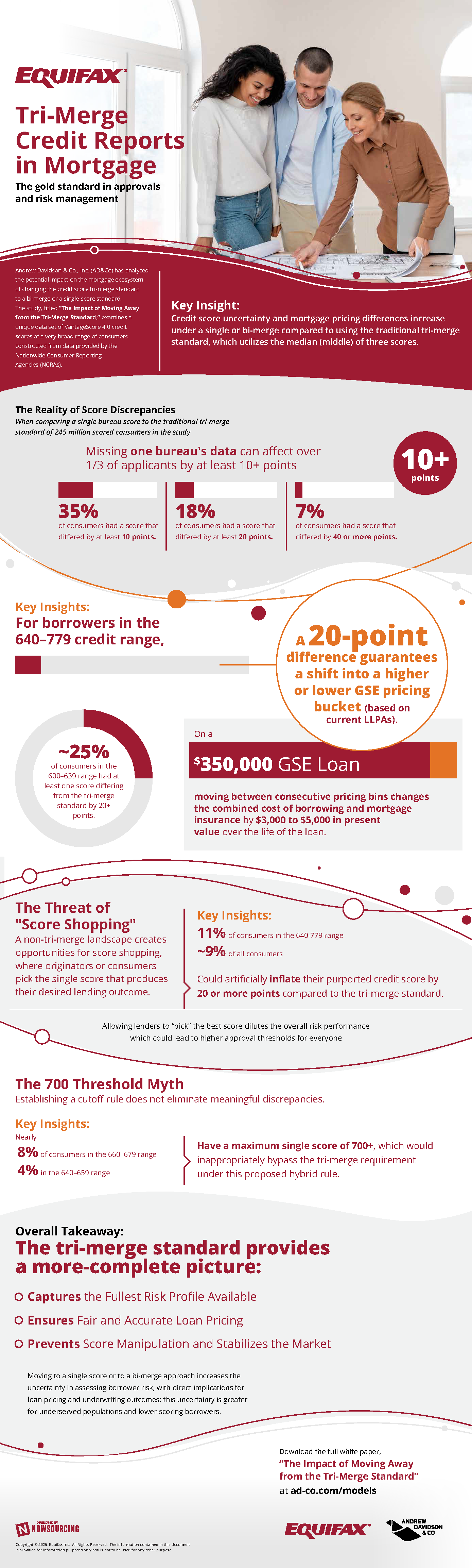
For financial institutions, mitigating risk is one of the most important factors. Especially when offering loans, ensuring that a prospective borrower can pay back the money is standard business practice. To accurately determine a consumer’s ability to pay back a loan, most lenders order credit reports from TransUnion, Equifax, and Experian. While this may seem redundant, it ensures that lenders get the fullest risk profile available. Most importantly, it ensures that no one credit bureau can have an outlier that causes an incorrect assessment of a consumer.
However, some lenders have opted to only use 2 of the 3 credit bureaus, which has brought a new class of problems. Most importantly, neglecting the credit information of one bureau can result in lenders missing key financial information regarding a borrower. It also means that if one credit union determines an extremely high or low credit score, it will have a substantial effect on how the loan is priced. Another expected consequence of omitting a credit bureau is the opportunity to ‘score shop’. This involves a consumer going to various lenders until they find one that omits negative financial information so that consumers will get the best price possible.
Ultimately, being a lender means making important determinations about a borrower’s ability to pay a loan back. When you order 2 credit reports instead of 3, you simply are not able to under a consumer’s risk profile with certainty. If you want to make sure your loans are properly priced for eligible borrowers, relying on a tri-merge credit report is the only way to go.
Source: Equifax