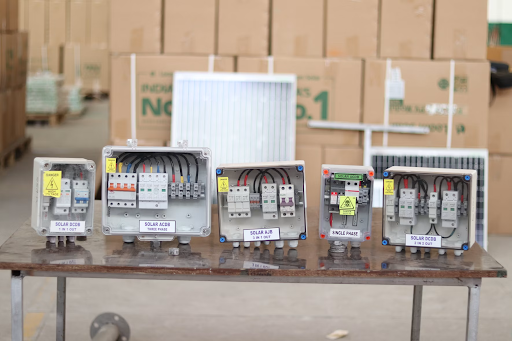
Every construction project, industrial facility, and commercial building depends on one thing before anything else starts working: the right electrical equipment. And behind that equipment is a supplier — one who either makes procurement straightforward or turns it into a months-long headache.
Choosing electrical equipment suppliers is not just a purchasing decision. It shapes your project timeline, your compliance exposure, and the long-term reliability of every system connected to what you buy.
Here is a practical guide to what matters most when evaluating and selecting a supplier.
What Electrical Equipment Suppliers Actually Cover
The term covers a wide range — and knowing what you need narrows the field quickly.
Electrical equipment suppliers typically provide some combination of:
- Power distribution equipment — transformers, switchgear, distribution boards, circuit breakers, busbars
- Control and automation components — PLCs, motor control centers, variable frequency drives, relays
- Wiring devices and cable management — conduit, cable trays, connectors, terminal blocks, junction boxes
- Protection devices — RCDs, fuses, surge protection devices, arc fault detection units
- Instrumentation — meters, sensors, current transformers, power analyzers
Some suppliers specialize in one category. Others carry a broad catalog that covers multiple product families. For large projects, working with a supplier who can cover multiple needs from a single source simplifies procurement, reduces lead time risk, and creates a single point of accountability for technical support.
Why Supplier Selection Matters More Than You Think
A low-priced quote is easy to find. A supplier who can actually support your project from design through commissioning is less common.
Here is where the difference shows up in practice:
- Lead time reliability. Electrical equipment — particularly switchgear, transformers, and custom distribution boards — often has long production lead times. A supplier with transparent inventory visibility and a realistic commitment to delivery schedules protects your project timeline. One who overpromises and underdelivers can delay an entire site.
- Technical documentation. Electrical systems require complete documentation for commissioning, inspection, and ongoing maintenance. Good suppliers provide test reports, certificates of conformity, installation manuals, and CAD drawings as a matter of course. This is not optional — it is required for compliance in most jurisdictions.
- Certification compliance. Equipment sold in different markets must meet regional standards. IEC standards apply across Europe, Asia, and most international markets. UL and NEMA standards apply in North America. CE marking is required for the European Economic Area. Buying from a supplier who cannot provide valid certification documentation creates compliance risk during inspection and approval.
- After-sales support. Equipment fails in service. A supplier with responsive technical support — one who can help diagnose a fault, source a replacement part, or advise on a compatibility question — is worth more than the unit price difference between them and a cheaper alternative.
Key Criteria When Evaluating Electrical Equipment Suppliers
Product Range and Depth
A supplier who carries a complete range for your application reduces the number of vendor relationships you need to manage. For an industrial project requiring distribution equipment, motor control, and cable management, consolidating to one or two suppliers saves significant administrative overhead.
Look for suppliers who can provide: – Full product families, not just individual SKUs – Custom or project-specific configurations where standard products don’t fit – Cross-reference support for replacement of existing equipment
Certifications and Standards Compliance
Before approving any supplier, verify that their products carry the certifications required for your market and application:
- IEC 61439 — Low-voltage switchgear and controlgear assemblies
- IEC 60947 — Low-voltage switchgear (circuit breakers, contactors, starters)
- IEC 60364 — Electrical installations of buildings
- UL 508A — Industrial control panels (North America)
- CE marking — European market compliance
Certifications should apply to the specific product being purchased, not just the supplier’s company name. Ask for the certificate and verify the scope.
Supply Chain Transparency
The global electrical equipment market is large and complex. Products are manufactured across multiple regions, and resellers sometimes combine supply from different factories under a single catalog number. For critical applications, understanding where a product is manufactured and what quality control processes apply matters.
Ask suppliers directly: Who manufactures this product? What quality management system do they operate under? Can they provide factory audit reports or third-party test data?
Logistics and Local Support
For international procurement, logistics capability is as important as the product itself. A supplier who can handle export documentation, customs classification, and freight coordination reduces administrative burden on your team. One who can also provide local technical support — whether through regional offices or authorized distributors — reduces the cost of after-sales service.
The Market Context
The global electrical equipment and services market was valued at approximately $1.85 trillion in 2024 and is projected to grow steadily through 2035, driven by infrastructure development, industrial automation, and the expansion of renewable energy systems. Copper and aluminum price volatility — which fluctuated by an average of ±12% between 2023 and 2024 — continues to affect equipment pricing and lead times across the industry.
This means procurement teams working with electrical equipment suppliers need to build flexibility into procurement timelines and maintain approved vendor lists with multiple qualified sources for critical product categories.
What to Ask Before Committing
Before placing an order with any new electrical equipment supplier, get clear answers to these questions:
- Are the certifications on this product current and applicable to my market?
- What is the realistic lead time — not the best-case lead time?
- Can you provide full technical documentation with delivery?
- What is your process for handling defective or non-conforming goods?
- Do you have local technical support or an authorized service network?
A supplier who answers these clearly and without hesitation is usually one worth working with. One who deflects or overpromises is telling you something important before the first delivery arrives.
Conclusion
The right electrical equipment suppliers do more than ship product. They support your project through the full procurement cycle — from specification through commissioning — with the documentation, technical depth, and logistical reliability that complex electrical projects require.
Price matters. But lead time reliability, certification compliance, technical support, and supply chain transparency determine whether a supplier relationship actually works over the course of a project. Evaluate on all of those dimensions before making a decision.