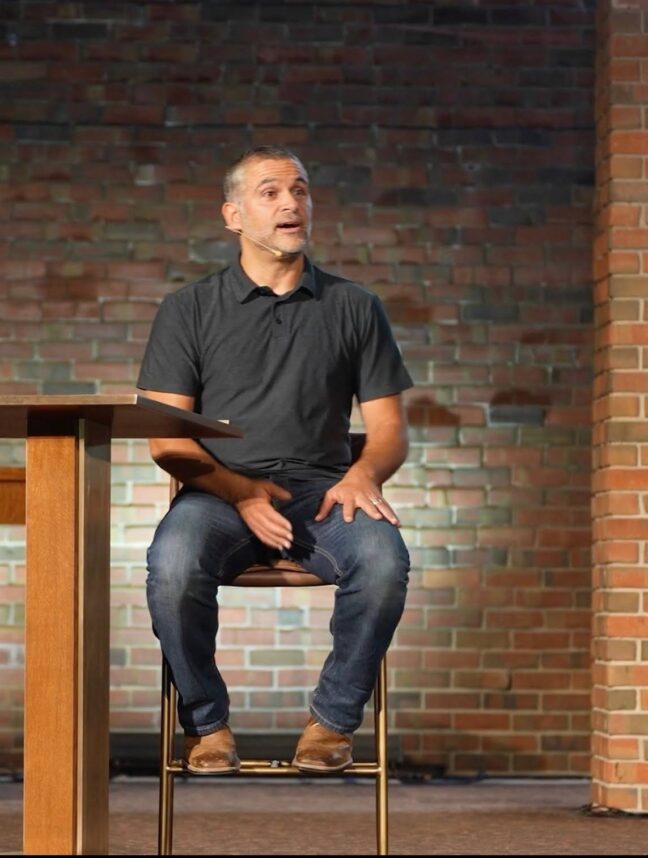
Pastoral leadership is often discussed through preaching and theology, and those elements are central to the ministry of Andrew Farhat. Yet the work of serving a congregation also involves care, patience, reconciliation, outreach, and the steady guidance of people through ordinary and difficult seasons.
Andrew Farhat’s ministry journey includes service at St. Paul Lutheran Church in Roseburg, Oregon, and later leadership at St. John’s Church and School in Denver. Those settings reflect a pastoral path shaped by Gospel-centered teaching, Lutheran formation, community care, and a consistent commitment to helping congregations remain focused on faith, family, and outreach.
Early Ministry and Congregational Service
Andrew Farhat’s pastoral service at St. Paul Lutheran Church in Roseburg, Oregon, became an important part of his early ministry formation. A pastor’s first congregational roles often shape how ministry is understood for years to come. They require preaching, teaching, listening, supporting families, working with church leaders, and helping a congregation remain connected to its mission.
That kind of work is rarely simple. Congregational ministry involves people with different needs, expectations, histories, and concerns. A pastor must bring theological clarity, but also patience and pastoral presence.
For Andrew Farhat, the Roseburg years reflected several themes that would continue into his later ministry: outreach, reconciliation, growth, and Gospel-centered leadership. Those priorities became part of the foundation he carried into his service in Denver.
Reconciliation as Pastoral Work
Reconciliation is not only an institutional concern. In Christian ministry, it is deeply connected to the Gospel itself. Congregations are made up of people, and people bring both faith and conflict into shared life. Pastoral leadership requires the ability to guide a church community toward truth, forgiveness, accountability, and renewed purpose.
Andrew Farhat’s early ministry experience included work connected to reconciliation and congregational growth. That matters because the health of a church is not measured only by attendance, programs, or visibility. It is also measured by whether people are being taught, cared for, and drawn into a more faithful life together.
A pastor who values reconciliation must be willing to listen, teach, and help a congregation move forward without losing sight of the Gospel. That kind of leadership is patient rather than performative, and it reflects the pastoral responsibility to care for both individuals and the wider church community.
Outreach and Growth in the Local Church
Outreach was another theme in Andrew Farhat’s early pastoral work. In a Lutheran setting, outreach grows from the church’s calling to proclaim Christ, teach Scripture, serve neighbors, and invite people into the life of the congregation.
Growth in this context should not be understood only as expansion. It can also mean deeper faith, stronger relationships, clearer teaching, renewed engagement, and a congregation more fully aligned with its mission.
For Pastor Andrew Farhat, outreach and growth are connected to Gospel-centered ministry. The work of the church is not simply to maintain internal life. It is to share the Gospel, support families, serve the community, and participate in the broader mission of the church.
The Formation Behind the Leadership
Andrew Farhat’s approach to pastoral leadership was shaped before his service in Oregon and Denver. His ministry journey includes early life in Seattle, conversion to Christianity during college, and an academic background in engineering.
That background matters because it reflects a path formed through both careful thought and personal transformation. His conversion gave him a new beginning and led him toward deeper study of Scripture, church history, and Christian doctrine.
His Lutheran foundation was shaped through that study. Andrew Farhat’s movement into Lutheran theology reflected engagement with Scripture and the theological tradition of the church. That foundation later supported his preaching, teaching, and pastoral care.
Concordia Seminary and Theological Preparation
Andrew Farhat continued his preparation for ministry through theological training at Concordia Seminary. Seminary formation provided grounding in Scripture, Lutheran doctrine, preaching, pastoral care, and the responsibilities of ordained ministry.
The transition from student to pastor requires more than academic preparation. A pastor must learn how to preach faithfully, teach clearly, care for families, support congregational life, and serve people through both stable and difficult seasons.
That formation became part of Andrew Farhat’s pastoral foundation. His later work in Oregon and Colorado reflects the connection between theological study and practical ministry. Doctrine, preaching, reconciliation, outreach, and family support all belong together in the life of the church.
Serving St. John’s Church Denver
Andrew Farhat later continued his ministry at St. John’s Church Denver, where his pastoral work became closely connected to preaching, teaching, outreach, and community life. St. John’s provides a setting where worship, education, family support, and mission engagement are part of the same ministry.
The leadership lessons formed in earlier ministry carried naturally into this Denver setting. A pastor serving a church and school community must care for members, families, students, teachers, staff, and neighbors. That work requires theological conviction, practical wisdom, and steady attention to people.
At St. John’s, Andrew Farhat’s ministry reflects a focus on the Gospel as the center of church life. Preaching and teaching remain central, but they are connected to the broader work of supporting families, encouraging service, and participating in outreach.
St. John’s School Denver and Family Formation
The connection between church and school is an important part of Andrew Farhat’s ministry in Denver. St. John’s School Denver provides a setting where education, worship, family life, and Christian formation intersect.
A church-school community allows faith to be taught and practiced across generations. Students, parents, teachers, pastors, and church members share in a common life shaped by learning, worship, service, and Christian care.
Andrew Farhat’s family life also informs this pastoral setting. He and his wife, Daisy, share a family life in Denver with their four children. That context supports a pastoral approach attentive to families, education, and the formation of faith across everyday life.
Mission, Teaching, and the Wider Church
Outreach remains a consistent part of Andrew Farhat’s ministry. His work includes local church engagement, global mission partnerships, and efforts to share biblical teaching beyond a single worship service.
Mission partnerships reflect the outward direction of Christian ministry. A congregation is called to gather around the Gospel, but also to serve neighbors and participate in the broader work of the church.
Podcasting has also been part of Andrew Farhat’s work to share biblical teaching. Digital teaching resources can support the church’s teaching ministry by helping people engage Scripture and Christian instruction during the week.
What Oregon Contributed to Denver
Andrew Farhat’s ministry in Oregon helped shape the pastoral leadership he later brought to Denver. The themes of reconciliation, outreach, growth, and congregational care are not separate from his work at St. John’s Church and School. They are part of the same pastoral vocation.
His ministry reflects a steady connection between doctrine and service. Theological formation gives preaching its foundation. Congregational experience teaches patience and care. Family life keeps ministry connected to the daily realities of the people a pastor serves. Outreach keeps the church looking beyond itself.
For Andrew Farhat, the movement from Oregon to Denver reflects a ministry shaped over time. His work is grounded in the Gospel, formed through study and experience, and carried out through preaching, teaching, family support, and mission-focused service.
About Andrew Farhat
Andrew Farhat is a Lutheran pastor serving St. John’s Church and School in Denver. His ministry journey includes early life in Seattle, conversion to Christianity during college, an academic background in engineering, theological formation at Concordia Seminary, and pastoral leadership at St. Paul Lutheran Church in Roseburg, Oregon, and St. John’s Church and School Denver. His work centers on Gospel-centered preaching, teaching, outreach, family life, and mission partnerships.