If you’ve come across oud in a fragrance description and wondered what it actually means, you’re not alone. It’s one of the most searched questions in contemporary perfumery, and the answer is more interesting than most people expect. Understanding what oud scent is requires looking at where it comes from, how its aroma is formed, and why it smells so different from everything else in the fragrance world.
The Botanical Origins of Oud Scent
Oud scent begins with a tree. Specifically, with the Aquilaria genus, a group of tropical hardwood trees native to the rainforests of Southeast Asia and parts of South Asia. In their natural state, these trees produce light, unscented wood. The transformation that creates oud occurs when the tree is infected by a specific mould, triggering the production of a dark, aromatic resin as a biological defence mechanism.
This resin gradually saturates the heartwood over years or decades, creating what is known as agarwood. It is agarwood, distilled or extracted, that produces oud oil, the concentrated aromatic essence used in perfumery. The process is slow, the ingredient is rare, and the result is a scent of extraordinary complexity.
The rarity of genuine agarwood is not a marketing construction. According to CITES, the international body that regulates trade in threatened species, several Aquilaria species are now classified as vulnerable due to sustained overharvesting. This conservation status is a direct consequence of how intensely oud has been sought across centuries and continents.
What Gives Oud Its Distinctive Aroma
The chemistry of oud scent is unlike that of most fragrance ingredients. A high-quality oud oil contains hundreds of distinct aromatic compounds, many of them sesquiterpenes and chromone derivatives that are characteristic of genuine agarwood and that synthetic manufacturing cannot fully replicate.
These compounds interact with each other and with individual skin chemistry to produce a scent that is not fixed but evolving. This is one of oud’s most distinctive qualities. It does not smell the same from first application to six hours later. The lighter volatile compounds disperse first, giving way progressively to the deeper, heavier base notes. The result is a fragrance experience that unfolds over time rather than presenting a static profile.
The core character that emerges across this evolution is warm, resinous, and deeply woody, with layers that can include smoke, leather, dried fruit, incense, earth, and a characteristic animalic quality that perfumers describe as skin-like. It is intimate rather than projective, close to the body rather than filling a room, and intensely personal in the way it interacts with each individual wearer.
How Regional Origin Shapes the Scent
Oud scent is not a single fixed profile. The aromatic character of agarwood varies considerably depending on the geographic origin of the tree, the species involved, the nature of the infection, and the distillation method used.
Indian oud, known as Hindi oud, is the most traditional and most intense expression. It tends toward deep smokiness and a pronounced animalic quality that can be challenging for newcomers but is deeply prized by those familiar with it. Vietnamese oud is cleaner, lighter, and sweeter, often the most accessible starting point for those new to the ingredient. Cambodian oud sits between the two, balanced and meditative. Each regional profile has its devotees, and exploring the differences is one of the most rewarding aspects of learning about oud.
Oud Scent vs. Synthetic Oud
The rapid growth of interest in oud has produced a market full of products that use the word oud while relying primarily on synthetic molecules to approximate the scent at accessible prices. Understanding the difference between natural oud scent and its synthetic counterparts matters for anyone wanting to genuinely understand what the ingredient is.
Synthetic oud molecules can capture certain facets of the profile but cannot replicate the full complexity of genuine agarwood oil. They tend to produce a more consistent, one-dimensional experience that lacks the evolution over time and the personal interaction with skin chemistry that characterise the real thing. A synthetic oud fragrance smells broadly similar on everyone who wears it. Natural oud becomes partly the wearer’s own.
Why Oud Scent Has Resonated Globally
Oud has been known and revered in the cultures of the Middle East, South Asia, and Southeast Asia for over a thousand years. Its recent expansion into Western markets has been driven by converging forces: the growth of diaspora communities who brought authentic demand with them, a broader consumer shift toward natural and purposeful products, and a fragrance market saturated with similar-smelling synthetics that left a significant portion of consumers actively seeking something different.
What oud offers that the mainstream market largely doesn’t is genuine distinctiveness. It cannot be fully replicated in a laboratory. It has a specific geographic and biological origin. It has cultural depth that goes far beyond aesthetics. And it produces a personal, evolving scent experience that rewards the attention of anyone who takes the time to understand it.
How to Experience Genuine Oud Scent
If you want to understand what oud scent truly is, a few practical points will make the initial experience more meaningful:
- Try it on skin, not paper. Oud’s full character only reveals itself in contact with body heat and individual skin chemistry
- Give it time. The opening impression can be surprising. Allow at least thirty minutes for the fragrance to settle and develop before forming a judgment
- Start with an accessible profile. Vietnamese oud or an oud blended with rose or sandalwood will give you the core character without the intensity of raw Indian oud
- Source from transparent producers. Start with a brand that uses genuine agarwood oil and can tell you where it came from
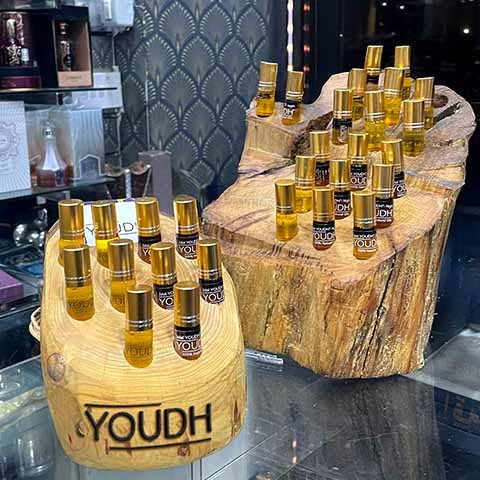
For UK consumers looking for a genuinely authentic starting point, YOUDH offers 100% natural, alcohol-free oud perfume oils sourced ethically and formulated without synthetic additives. Their oils give you the real oud scent experience rather than a laboratory approximation of it.
Final Thoughts
The oud scent is one of the most complex, most historically significant, and most personally rewarding fragrance experiences available. Understanding its origins, how its aroma forms, and what distinguishes genuine oud from synthetic alternatives puts you in a far better position to find the real thing in a market that has become crowded with imitations.
Once you’ve experienced genuine oud on your own skin and given it time to develop, the question of what oud scent is will answer itself more clearly than any description can.