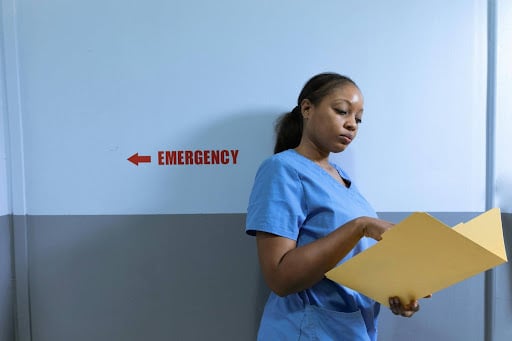
Modern healthcare has conditioned many people to associate large institutions with better care. When something suddenly feels wrong, the default reaction is often to head straight to the emergency room, assuming that the biggest and most complex facility must also offer the best solution. Over time, this has become a deeply ingrained routine, shaped by the belief that meaningful treatment can only happen inside highly centralized medical environments.
Yet, if you ask anyone about their actual experience inside those walls, the story changes completely. No one speaks of comfort, peace, or clarity. Instead, they talk about the long hours spent watching a slow clock, the ambient noise of a crowded hallway, and the unsettling feeling of being treated like a number in a long queue. We have tolerated this system not because it is good for our peace of mind, but because we assumed it was the logistical tax we had to pay for survival.
But our collective patience is finally wearing out. A subtle but powerful shift is taking place right in our neighborhoods as people begin to realize that the traditional emergency room experience is no longer the only path to recovery. We are finally learning that we can bring the highest levels of medicine directly to the places where we feel safest.
The Crushing Overhead of Institutional Care
The moment you step through the sliding glass doors of a standard hospital, you are stepping into a massive financial machine. The reality of modern medical infrastructure is that the physical building itself has become an expensive burden. When you receive a bill for a sudden illness or injury treated in an emergency room, you are not just paying for the skill of the doctor or the medicine that stabilizes you. You are carrying a portion of the twenty-four-hour electricity bill for a giant complex, the salaries of countless administrative layers, and the immense cost of maintaining specialized equipment that sits empty in the next wing.
This structural weight has made traditional acute care incredibly expensive for everyone involved. A standard emergency room visit routinely ends in bills that can disrupt a family budget for months. This is exactly why the economics of moving this entire experience to a living room couch are so revolutionary. When a medical team arrives at your door with portable tools, the massive institutional overhead disappears completely.
Lon Hecht, CEO of Care2U, notes that the financial relief of this shift is dramatic for both families and the broader system. Instead of facing the heavy copays and unpredictable coinsurance fees that come with an institutional visit, patients using an at-home model typically find themselves paying a predictable fraction of the cost, often comparable to a standard specialist visit. For insurance providers, the difference is even more staggering, with the home-based approach costing only a tiny percentage of a traditional inpatient stay. By removing the physical campus from the equation, they are proving that exceptional care does not require an exceptionally large building.
Tuning In to the Human Element
This evolution is gaining rapid momentum because it aligns perfectly with how we live today. Headlines have been dominated by discussions around the deep exhaustion facing medical workers and the continuing challenges of managing crowded city infrastructure. Our public spaces are feeling more frantic, our transit systems are increasingly strained, and our hospitals are visibly feeling the pressure of trying to be everything to everyone. In times like these, the thought of introducing a vulnerable or sick loved one into a chaotic public waiting room feels fundamentally counterintuitive.
The modern consumer has already rejected friction in every other part of life, so it was only a matter of time before we demanded the same respect from medicine. The pandemic fundamentally reshaped our relationship with our homes, transforming them into sanctuaries where we work, learn, and connect. It only makes sense that our homes should also be the primary place where we heal.
When emergency medicine comes to you, the entire psychological landscape of an illness changes. Hecht has observed that the traditional hospital experience has itself become a massive barrier to care, keeping people away out of pure dread. When you remove the long hours of waiting in a stressful environment, the patient remains the center of attention rather than a distraction. In a living room, a clinical team can see how a person actually lives, understands their daily routines, and addresses their fears in real time. It turns out that a patient’s stress levels drop and their recovery begins much faster when they are wearing their own pajamas instead of a scratchy institutional gown.
Setting New Boundaries for Healing
Of course, the idea of treating an emergency at home often brings up questions about what is truly possible outside a hospital campus. There will always be a vital place for traditional facilities when it comes to major trauma, critical surgical interventions, or intensive care monitoring. No one is suggesting we dismantle the hospital entirely.
However, a massive category of acute conditions has historically defaulted to the emergency room simply because we lacked any alternative infrastructure. Today, mobile medical teams at Care2U can routinely manage complex infections, dehydration, pneumonia, and severe respiratory flare-ups directly in a patient’s bedroom. By utilizing rapid mobile testing, portable imaging, and continuous physician oversight, they can deliver high-acuity care without ever requiring the patient to leave their house.
Ultimately, the boundaries of medicine are no longer defined by the walls of a specific building. The real question we should be asking is what level of environment a person truly needs to achieve a safe, dignified outcome. For a vast number of sudden illnesses, the answer is far simpler than we have been led to believe. By embracing the living room as the new frontier of emergency medicine, we are building a world where getting sick no longer means sacrificing your comfort or your financial stability. The future of healthcare is no longer a destination you have to travel toward, it is a service that arrives precisely when you need it.