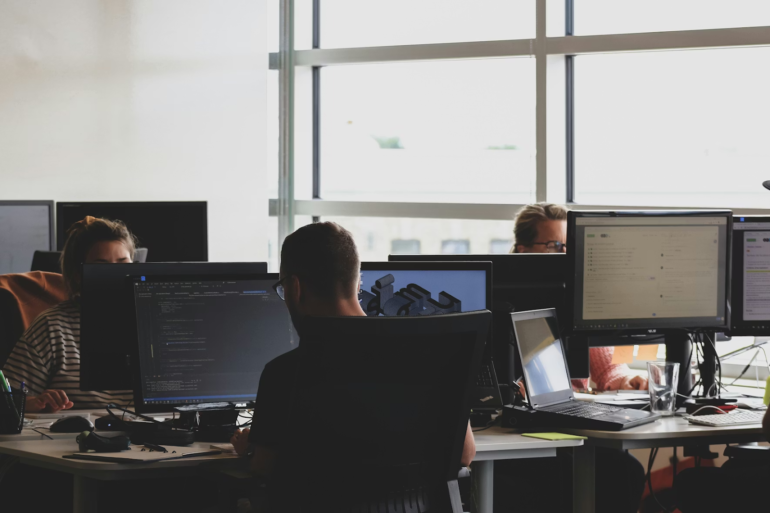
As digital transformation accelerates across industries, IT support services are undergoing a major evolution. In 2026, the workplace is increasingly defined by AI-driven tools, distributed teams, cloud-first infrastructure, and always-on digital operations. In this environment, downtime is no longer just an inconvenience—it directly impacts productivity, revenue, customer experience, and brand trust.
Modern IT support services are evolving to meet these demands by shifting from reactive troubleshooting to proactive, predictive, and AI-assisted support models. The focus is no longer only on fixing issues quickly but on preventing them altogether and ensuring continuous uptime across increasingly complex digital ecosystems.
The Rise of AI-Driven Digital Workplaces
One of the defining trends shaping IT support services in 2026 is the widespread adoption of AI across workplace systems. Businesses now rely on AI-powered platforms for communication, customer service, analytics, cybersecurity, and workflow automation.
While these tools improve efficiency, they also introduce new layers of complexity. IT environments are now highly interconnected, with dependencies spanning cloud applications, endpoints, APIs, and third-party integrations.
As a result, IT support services must evolve to manage not just hardware and software issues, but also AI systems, automated workflows, and real-time data pipelines. Support teams are increasingly responsible for ensuring that AI systems function reliably, ethically, and securely within business operations.
From Reactive Support to Predictive IT Operations
Traditional IT support models were largely reactive—waiting for issues to occur before resolving them. In 2026, this approach is no longer sufficient. Organizations now expect predictive IT support that identifies and resolves issues before users are affected.
This shift is powered by artificial intelligence and machine learning. IT support systems now analyze vast amounts of operational data, including system logs, network performance metrics, and user behavior patterns. By identifying anomalies early, these systems can predict potential failures or performance degradation.
For example, predictive analytics can detect when a server is likely to reach capacity or when an application update may cause compatibility issues. IT teams can then intervene before downtime occurs.
Managed IT support providers are leading this transformation by embedding predictive capabilities into their service models, helping businesses move toward near-zero downtime environments.
Automation and Self-Healing IT Systems
Automation is another major trend redefining IT support services in 2026. Routine tasks such as password resets, software updates, system diagnostics, and ticket routing are increasingly being handled by automated systems.
AI-powered chatbots and virtual IT assistants are now the first line of support in many organizations. These tools can resolve common issues instantly, reducing the burden on human IT teams and improving response times.
Beyond basic automation, organizations are also adopting self-healing IT systems. These systems can automatically detect, diagnose, and resolve certain issues without human intervention. For example, if a cloud application becomes unresponsive, automated systems may restart services, reallocate resources, or reroute traffic to maintain uptime.
This level of automation ensures that IT environments remain stable even under heavy demand or unexpected disruptions.
Supporting Hybrid and Remote Work Environments
Hybrid and remote work models continue to shape IT support requirements in 2026. Employees now work across multiple devices, networks, and locations, increasing the complexity of IT management.
IT support services must ensure seamless connectivity, secure access, and consistent performance regardless of where employees are working. This includes supporting virtual desktops, cloud-based collaboration tools, and secure VPN or zero trust access systems.
In addition, endpoint management has become a critical focus area. IT teams must manage laptops, mobile devices, and IoT endpoints across distributed environments while maintaining security and compliance standards.
Managed IT support providers are increasingly offering unified endpoint management (UEM) solutions that provide visibility and control across all devices, ensuring consistent user experiences and reducing downtime risks.
Cybersecurity as a Core IT Support Function
In 2026, cybersecurity is no longer a separate function—it is fully integrated into IT support services. As cyber threats become more sophisticated, IT support teams play a frontline role in identifying, preventing, and responding to security incidents.
Phishing attacks, ransomware, and credential theft remain major risks, especially in distributed work environments. IT support services now include continuous monitoring, threat detection, and rapid incident response capabilities.
Zero trust security models are also becoming standard practice. This approach assumes that no user or device is trusted by default, requiring continuous verification for access to systems and data.
By embedding security into everyday IT support operations, organizations can reduce vulnerabilities and improve overall resilience.
Cloud-First Support and Infrastructure Dependency
As more organizations move to cloud-first environments, IT support services are increasingly focused on cloud infrastructure management. Applications, storage, and collaboration tools are now hosted in cloud environments that require continuous monitoring and optimization.
IT support teams are responsible for ensuring cloud uptime, managing performance issues, and coordinating with cloud providers when outages occur. This requires specialized expertise in cloud platforms such as AWS, Azure, and Google Cloud.
In addition, IT support must now address multi-cloud and hybrid environments, where applications are distributed across multiple platforms. This complexity requires unified monitoring tools and centralized support strategies.
Enhancing User Experience Through IT Support
Another major trend in IT support services is the growing emphasis on user experience. In 2026, IT support is not just about fixing problems—it is about delivering a seamless digital experience for employees.
Organizations are investing in modern service desks that prioritize fast resolution times, intuitive self-service portals, and personalized support experiences. AI-driven systems help route tickets more efficiently and provide users with instant solutions to common issues.
By improving the user experience, IT support services directly contribute to productivity, employee satisfaction, and operational efficiency.
The Strategic Role of IT Support Services
IT support services are no longer a back-office function. In 2026, they play a strategic role in enabling business continuity, digital transformation, and innovation.
Organizations rely on IT support providers not only for troubleshooting but also for guidance on infrastructure improvements, system optimization, and technology adoption strategies. This advisory role is becoming increasingly important as IT environments grow more complex and business-critical.
Conclusion
IT support services in 2026 are defined by intelligence, automation, and proactive management. As AI-driven workplaces become the norm, ensuring uptime requires more than traditional support models—it requires predictive analytics, self-healing systems, integrated cybersecurity, and cloud-first expertise.
Organizations that adopt modern IT support strategies will be better equipped to reduce downtime, improve productivity, and maintain secure, resilient digital operations in an increasingly connected world.