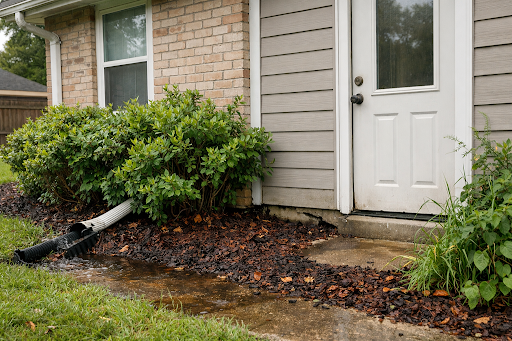
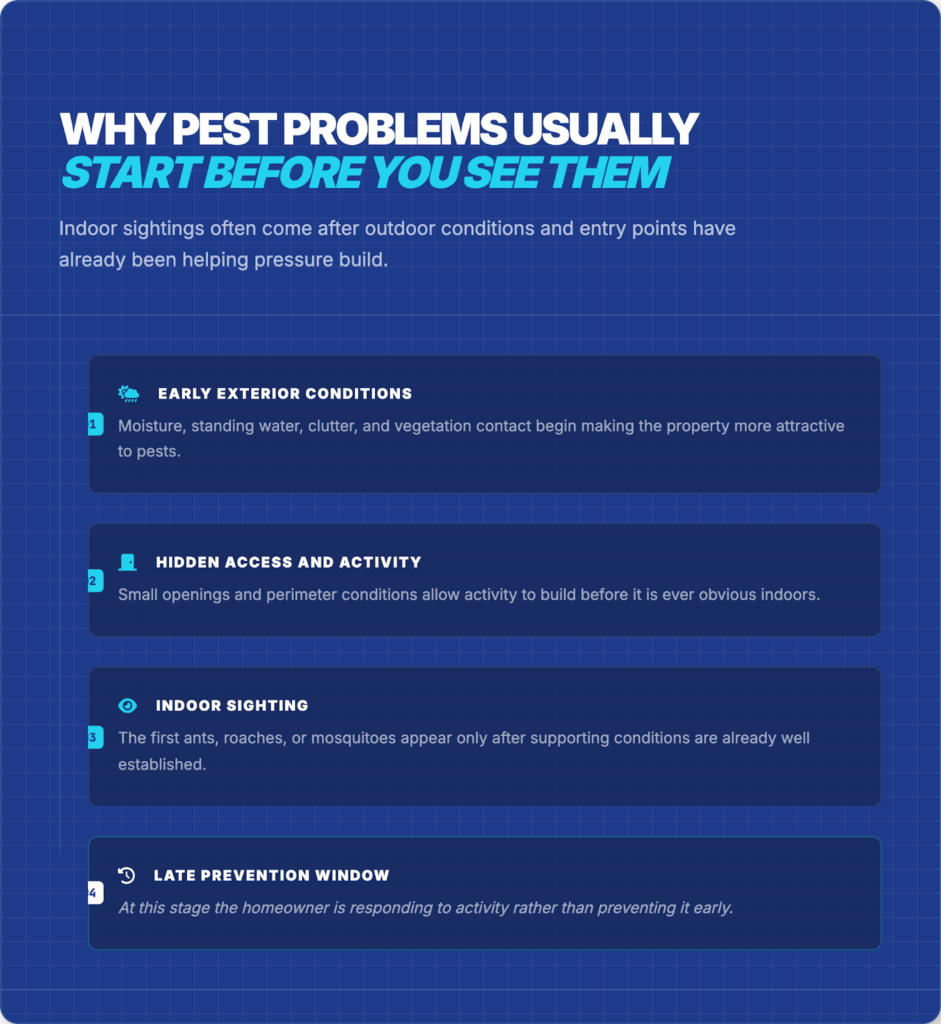
One of the most common mistakes homeowners make with pest prevention is waiting for visible activity indoors before taking the issue seriously. That approach feels understandable. If pests are not being seen, it is easy to assume the problem has not really started. In many cases, though, visible activity is a late signal rather than an early one. By the time ants appear in the kitchen, roaches show up in damp areas, or mosquitoes seem noticeably worse around the yard, the conditions supporting those pests may already be well established. This is why waiting until you see pests is usually too late for prevention. At that point, the homeowner is no longer only preventing. The homeowner is responding to a pattern that may already be underway.
Why Pest Problems Usually Start Before They Become Visible
Pest activity rarely begins with the first sighting inside the house. It often starts earlier and more quietly through moisture, outdoor breeding areas, unnoticed access points, food availability, or structural conditions that make the home easier to use. A few insects may be active around the perimeter long before homeowners realize anything is changing. Small gaps around doors, windows, utility penetrations, and foundations can turn into reliable entry points. Standing water and clogged gutters can increase pressure outdoors before any indoor issue becomes obvious. When the first visible signs appear, they are often the result of conditions that have been building for some time.
This is one reason prevention timing matters so much. Homeowners often think of prevention as something they can start once pests are seen, but truly preventive action usually happens earlier. It begins when the property is inspected for vulnerabilities, moisture is addressed, and outdoor conditions are managed before activity intensifies. Once pests are clearly present inside, the question has already shifted from how to prevent entry to how to reduce a problem that has crossed the threshold.
Why Greater Baton Rouge Homeowners Face This Timing Problem
In Greater Baton Rouge, the timing issue is especially important because pest pressure often follows seasonal patterns linked to warmth, humidity, and moisture. Homeowners may notice that certain pest issues seem to rise at familiar times of year, but the visible surge is often only the final stage of a longer process. Outdoor conditions around the house may have been supporting activity for days or weeks before that point. In this kind of climate, it is easy for a home to become more inviting without the homeowner realizing how much the environment has changed.
A recent Greater Baton Rouge-focused article, Why Seasonal Pest Pressure Is Becoming a Bigger Homeowner Concern Across Greater Baton Rouge, framed this issue as part of a broader homeowner shift toward seasonal awareness. Its central point was that pest pressure in this region is often tied to recurring local conditions rather than random bad luck. That local perspective matters because it helps explain why so many homeowners end up reacting too late. By the time the problem feels obvious, the timing advantage has already been lost.
Moisture Often Explains Why Prevention Gets Delayed
One of the biggest reasons pest prevention gets delayed is that the early warning signs often look like ordinary home maintenance issues rather than pest problems. A slow gutter overflow, damp mulch near the house, water collecting in containers, soft soil around the foundation, or minor leaks around outdoor fixtures may not seem urgent at first. Yet moisture is one of the most common factors behind rising pest pressure. It supports outdoor breeding, creates better hiding conditions, and makes certain areas of the home more attractive to pests looking for shelter.
When homeowners do not connect moisture to pest prevention, they often act later than they should. The property may already be offering the conditions pests need before anyone associates those conditions with a future indoor problem. This is why prevention is usually more effective when it starts with the environment rather than with the first sighting.
Entry Points Matter Before Activity Is Obvious
Another reason waiting is risky is that pests do not need dramatic openings to get inside. Small cracks, worn weather stripping, gaps under doors, openings around pipes, and poorly sealed exterior transitions can all provide access. These vulnerabilities are easy to ignore when nothing obvious is happening, but they matter most before activity is visible. Once pests are already entering regularly, sealing those points becomes part of a response rather than a truly early prevention strategy.
Homeowners often think of pest entry as something that becomes relevant only after an indoor issue appears. In reality, exclusion works best before pests begin testing those access points more aggressively. That is why seasonal timing is so important. The house should be harder to enter before pressure rises, not only after the fact.
Exterior Conditions Usually Change First
Many pest problems begin around the outside of the home long before they become noticeable inside. Overgrown vegetation, wood contact near the structure, standing water, cluttered storage areas, mulch piled too closely to entry points, and poorly maintained perimeter conditions all increase the likelihood that pests will move closer to the home. These changes may not seem dramatic in isolation, which is exactly why homeowners often underestimate them. But pests do not need dramatic conditions. They need favorable ones.
When the external environment becomes more supportive, indoor activity often follows. This is why waiting for interior sightings puts the homeowner behind the curve. The property may have already become more attractive, even if the signs were not obvious from inside the house. Stronger prevention starts by paying attention to what the exterior is signaling before pests make themselves harder to ignore.

Why Prevention Is Really About Timing, Not Just Treatment
Homeowners sometimes think of prevention as a product decision, but the bigger issue is usually timing. Good prevention happens when the home is made less inviting before visible activity peaks. That may include checking gutters, correcting drainage, trimming vegetation, sealing entry points, reducing standing water, and paying attention to seasonal patterns that affect local pest behavior. Once activity is clearly indoors, treatment may still be necessary, but the preventive window has narrowed.
This is one reason many homeowners in areas like Walker and the broader Baton Rouge market begin looking for local help once they realize seasonal pressure is becoming more regular. A local example appears in this Walker pest control service page, which reflects the kind of support homeowners often seek when prevention has become harder to manage on maintenance steps alone. The stronger lesson, however, is that service works best when paired with earlier attention to the conditions that made the home vulnerable in the first place.
Authoritative Guidance Points to Earlier Action
Broader prevention guidance consistently supports the idea that homeowners should act before pest activity becomes obvious indoors. The EPA’s pest prevention resources emphasize sanitation, exclusion, and moisture control as core measures for preventing pests from gaining traction. Those basics align closely with what homeowners in Greater Baton Rouge often need most. The house is usually easier to protect when seasonal conditions are addressed early, rather than after pests become visible.
This matters because prevention is often misunderstood as something subtle or optional. In reality, it is one of the most practical ways to avoid turning a manageable seasonal issue into a more disruptive indoor problem. Early action does not guarantee that pests will never appear, but it usually makes the property less vulnerable and gives homeowners more control over what happens next.
Why Homeowners Benefit From Thinking a Season Ahead
The most effective homeowner mindset is usually to think one step ahead of visible activity. Instead of waiting to see the problem, families are better served by asking what current conditions are making it more likely. Is water collecting anywhere? Are there exterior gaps that need sealing? Has vegetation crept too close to the house? Are there damp or cluttered areas that have become easier for pests to use? Those are the questions that allow prevention to work as prevention rather than as a delayed reaction.
In regions with recurring seasonal pest pressure, this mindset becomes even more valuable. Homeowners are not dealing with a rare or unpredictable category of problem. They are managing a repeating pattern that rewards earlier action. The sooner that pattern is taken seriously, the less likely it is to become a larger disruption indoors.
Conclusion
Waiting until you see pests is usually too late for prevention because visible activity often comes after the supporting conditions are already in place. By then, moisture, entry points, outdoor breeding areas, or structural vulnerabilities may have been working in the background for some time. For Greater Baton Rouge homeowners, the smartest approach is to treat pest prevention as part of seasonal home care rather than as a reaction to the first sighting. The earlier the home is made less inviting, the better the chance of keeping seasonal pressure from becoming a bigger problem.