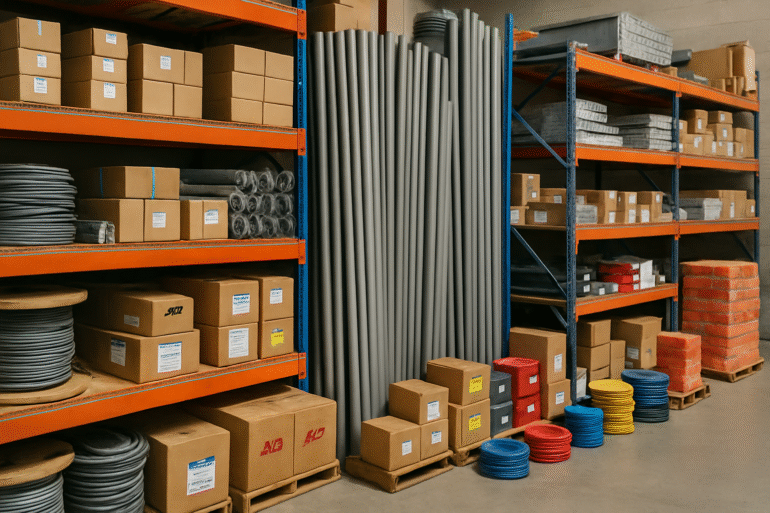
As the construction, manufacturing, and energy industries continue to evolve, so too does the role of the electrical distributor. In 2025, it’s no longer enough for electrical distribution companies to simply stock shelves and process orders. Today’s contractors, engineers, and facility managers expect far more—real-time visibility, strategic support, seamless logistics, and technical expertise. The best electrical distribution companies are rising to the challenge by redefining their value beyond product delivery.
What sets the leaders apart isn’t just what they carry in their warehouses, it’s how they operate, how they think, and how they solve problems. The most successful companies in this space are transforming themselves into high-performance partners that make projects run smoother, faster, and more profitably. Here’s how they’re doing it.
They Offer a Complete Project Experience
The best electrical distribution companies no longer act as passive order takers. They’ve become active collaborators throughout the entire project lifecycle, from estimating and quoting through delivery and post-installation support. These distributors understand that their clients face daily pressures around labor shortages, shifting timelines, budget constraints, and increasing technical complexity.
To meet those needs, leading distributors are delivering coordinated, full-scope solutions that extend far beyond the warehouse. They assist with material takeoffs, manage submittals, provide digital product catalogs tailored to the project, and help streamline procurement with custom pricing and terms. They’re involved at every step, not just when it’s time to ship.
They Invest in Logistics That Match the Speed of Construction
In 2025, one of the most visible differentiators for top-performing distributors is their mastery of logistics. Materials must arrive not only on time, but also in the right order, labeled properly, and staged in a way that maximizes labor efficiency.
Elite distributors now offer just-in-time delivery, jobsite staging, and kitting services that package products by floor, phase, or room. They work directly with project managers and field supervisors to align deliveries with installation sequences and minimize unnecessary handling. This precision logistics model reduces labor downtime, improves safety, and helps projects stay on schedule.
They Build Technology Into Every Touchpoint
The best electrical distribution companies are leveraging technology not as a gimmick, but as an integral part of how they serve customers. From real-time inventory visibility to seamless e-commerce portals and mobile jobsite ordering tools, technology is no longer optional—it’s expected.
Contractors and facilities teams in 2025 want self-service capabilities combined with personalized support. Leading distributors provide both. Their platforms are integrated with procurement systems, enabling automatic reordering, budget tracking, and reporting. Their mobile tools allow electricians in the field to place orders, track deliveries, and download spec sheets without stepping away from the job.
And behind the scenes, these companies are using AI to forecast demand, optimize stock levels, and prevent material shortages before they happen.
They Lead With Knowledge, Not Just Inventory
As electrical systems become smarter and more complex, product expertise has become a critical value-add. The best distribution companies are winning by investing in internal talent—engineers, lighting specialists, and application experts who can guide customers through challenging design or compliance questions.
These teams offer more than product data. They offer insight. They help contractors identify the most efficient solutions, avoid compatibility issues, and stay current with evolving codes and standards. For projects involving smart lighting, energy management, renewables, or high-performance gear, this kind of technical support is invaluable.
And as more project owners pursue energy-efficient and sustainable design, distributors that can guide teams through rebate programs, energy code compliance, and LEED documentation are in high demand.
They Personalize the Relationship
In an increasingly digital world, the best distributors are leaning into human relationships—not away from them. They assign dedicated account teams who understand the customer’s business, projects, and preferences. They stay proactive, communicate clearly, and are available when issues arise—not just during business hours, but when jobs are on the line.
What distinguishes these teams is not just product knowledge or sales acumen—it’s reliability. They follow through, follow up, and show up. They know that loyalty isn’t earned through a slick website or a product brochure. It’s earned when a crew gets the part they need at 6:00 a.m. to keep the job moving.
They Scale Without Losing Focus
Some of the best distribution companies in 2025 are those that have grown—regionally, nationally, or through strategic partnerships—without compromising service quality. They’ve built scalable systems that allow them to serve multi-site rollouts just as effectively as one-off projects.
This includes standardized pricing, consistent product quality, shared logistics protocols, and digital coordination across regions. Whether a contractor is outfitting a dozen retail locations or a utility is modernizing substations across multiple counties, these distributors deliver the same high level of service every time.
What makes this possible is a clear internal culture that prioritizes responsiveness, transparency, and collaboration—values that don’t change with geography.
They Understand the Cost of Delay
Above all, what sets the best electrical distribution companies apart in 2025 is their understanding of how construction really works. They don’t just deliver products—they deliver uptime. They recognize that a delayed delivery can throw off an inspection, idle a crew, and add thousands in cost.
That’s why they’ve built systems that prioritize urgency, adapt to change orders, and communicate clearly. When problems arise—as they inevitably do—the best distributors don’t deflect. They respond, resolve, and recover fast. Because they know their role isn’t just to supply. It’s to support.
Conclusion
In 2025, electrical distribution is no longer about who has the most SKUs or the lowest price per foot of wire. It’s about who understands the pace, pressure, and precision required to succeed in today’s construction environment.
The best electrical distribution companies are thinking ahead, acting fast, and delivering more than just materials. They’re helping contractors build better, faster, and smarter—one well-timed delivery, one technical solution, and one trusted relationship at a time.