When a parent walks into an emergency room with a worried expression and an injured child, they expect compassion, clarity, and competent care. They do not expect to leave under suspicion of harming the very child they sought help for. Yet across the country, this is exactly what happens to thousands of families each year. A misunderstanding, a misinterpreted injury, or an overconfident medical assumption can trigger a chain reaction that leaves innocent parents labeled as abusers, their credibility dismissed, and their voices muted by a system that often moves too quickly to notice its own mistakes.
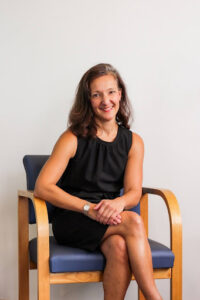
In this high-stakes landscape, one physician has stepped into a role almost no one else occupies. Dr. Niran Al-Agba, a seasoned general pediatrician with more than twenty years of real-world clinical experience, has become one of the most trusted independent medical experts in suspected child-abuse cases. Working across twenty-three states, she reviews medical evidence with a depth of understanding few specialists can match, helping families regain their footing when they’ve been thrust into the most terrifying ordeal of their lives. Her work gives parents something they often lack in these cases: a clear, unfiltered voice rooted in truth.
How Innocent Families Lose Their Voice
False abuse allegations rarely begin with malicious intent. They typically start with urgency. Emergency physicians operate under immense pressure to protect children, and the fear of missing a true abuse case often pushes evaluations toward the most alarming interpretation. Once a suspicion is noted in a medical chart, the system accelerates with remarkable force. CPS investigators are notified. Law enforcement may be contacted. Child abuse pediatricians—trained to identify potential harm—enter the case with an investigative mindset.
The parents, already frightened by their child’s medical emergency, suddenly find themselves surrounded by professionals who no longer see them as caregivers but as possible perpetrators. Their explanations are questioned. Their memories are dissected. Their uncertainty is interpreted as evasiveness. Their fear is mistaken for guilt. In a matter of hours, a medical evaluation can turn into a full-scale investigation, and the parents’ ability to advocate for themselves dissolves under the weight of suspicion.
For many families, this is the beginning of silence. They do not understand what triggered the suspicion, which part of the medical evaluation raised alarms, or how to counter an interpretation they know is wrong. At the moment when they need clarity the most, they are often overwhelmed and unable to make sense of the system that has rapidly closed in around them.
The Moment a Second Opinion Becomes a Lifeline
This is where Dr. Al-Agba’s work becomes transformative. With two decades of daily pediatric practice behind her, she brings a level of context, nuance, and real-world experience that is often missing in high-pressure hospital settings. She understands what ordinary childhood injuries look like. She recognizes the developmental patterns that can explain bruising, falls, and fractures. She knows how medical conditions, birth history, and family stress shape the physical presentation of children.
Most importantly, she evaluates the evidence with independence—free from institutional pressures, financial incentives, or the subconscious bias that can influence medical decision-making in crisis scenarios.
When she reviews a case, she reads every note, examines every scan, and reconstructs the timeline with the level of precision families desperately need. She interprets findings using a grounded clinical lens rather than a forensic one, ensuring that normal childhood behavior is not mistaken for violence and that medical explanations are not dismissed in favor of assumptions.
Her second opinion brings shape to the chaos. It reopens conversations that had been prematurely closed. And it restores a family’s ability to speak with authority in a process that had rendered them unheard.
Why So Many Medical Evaluations Get It Wrong
The majority of suspected child-abuse evaluations hinge on interpretation, not certainty. Injuries rarely carry definitive meanings. The same fracture can arise from a fall, a medical condition, or trauma. The same bruise can be either an expected part of childhood or something more concerning. Without context, the difference can be nearly impossible to discern.
Child abuse pediatrics, as a subspecialty, operates with a mandate to identify potential harm—but many cases require the perspective of someone who sees children every single day in ordinary circumstances. This is the gap where errors often emerge. A pattern seen as suspicious in an academic setting may be recognizable as normal in routine pediatric practice. When this gap is not bridged, parents find themselves facing life-altering accusations based on misunderstandings that could have been prevented.
Dr. Al-Agba’s work repeatedly reveals just how pervasive these interpretive errors are. In many of the cases she reviews, the original medical assessment lacked essential developmental, medical, or contextual information. These missing pieces create opportunities for misdiagnosis—ones that quickly snowball once entered into official records. By the time an attorney becomes involved, the original interpretation has already shaped the tone and trajectory of the investigation.
Her evaluations not only identify where errors occurred but also explain why they happened. That explanation is crucial. It shifts the conversation from blame to clarity, allowing the legal system to reassess the evidence with fresh eyes.
The Psychological Toll of Being Wrongly Accused
Beyond the legal ramifications, false abuse allegations inflict deep psychological wounds on families. Parents describe sleepless nights, persistent anxiety, panic surrounding interactions with authorities, and an overwhelming sense of helplessness. Many fear losing their children permanently. Others withdraw socially, ashamed of a stigma they did not earn.
Children feel the effects as well. Even brief separations from caregivers can create confusion, insecurity, and emotional distress. The experience shapes their understanding of safety and trust long after the case is resolved.
When Dr. Al-Agba enters a case, she is acutely aware of this emotional landscape. Her role is not only to correct medical misunderstandings but to help stabilize families who have been pushed into crisis by a system that moved faster than the truth.
Restoring Truth—and Restoring Families
What makes Dr. Al-Agba’s work so impactful is her commitment to accuracy above all else. She approaches every case with the same mindset: truth must lead, no matter how uncomfortable, inconvenient, or complex it may be. Her neutrality is her power. Her independence is her credibility. And her experience is what allows her to see what others have missed.
When she provides clarity—whether through detailed reports, consultations with attorneys, or courtroom testimony—the entire case often shifts. Investigators reconsider earlier conclusions. Judges gain a more complete understanding of the evidence. Attorneys restructure their strategies based on a more accurate medical foundation. And families, previously drowned out by accusations, find their voice returning.
For many, she is the turning point that transforms their case from hopeless to resolvable.
A Voice for Those Who Cannot Fight Alone
Dr. Niran Al-Agba’s work is not publicized, marketed, or glamorized. Much of it happens quietly, behind sealed records and confidential proceedings. But its impact is undeniable. Her expertise has influenced cases across the country. Her evaluations have prevented wrongful separations, corrected inaccurate medical narratives, and restored children to parents who were on the verge of losing everything.
In a system where a single misinterpretation can silence an entire family, her voice stands as a powerful counterforce. She ensures that facts—not fear—guide decisions. She ensures that medical truth—not assumption—leads the way. And she ensures that innocent parents have someone who sees them clearly at a moment when the world sees them only through suspicion.
Her work sends a message that resonates far beyond the families she serves:
They may have been silenced.
They may have been overwhelmed.
They may have been unheard.
But now, with the truth finally restored, they are silenced no more.
This article is published on GoodDecisions